The Future of Learning – Personalised, Playful, and Sustainable
Is the Future of Examinations and Lectures Changing?
The world of learning is undergoing a fundamental transformation. Digitalisation, the growing importance of soft skills, and the expectation that knowledge should be quickly applicable are driving a major shift in learning.
This raises several important questions:
- Will traditional end-of-semester examinations soon become a thing of the past?
- Which skills will become more important in the future?
- What will the future of learning look like?
A Generational Shift and a New Way of Learning
Generation Z and the generations following it have grown up in a fast-moving and digitally shaped world.
For them, learning is no longer an isolated activity that takes place exclusively in lectures or through books. Instead, many learners prefer interactive, practical, and playful methods that motivate them and encourage active participation.
At the same time, companies have recognised that memorisation alone – although still important in certain areas – is no longer sufficient.
Increasingly important skills include:
- problem-solving
- teamwork
- creativity
- critical thinking
- independent work
- the practical application of knowledge
Knowledge alone is not enough if learners cannot apply and retain it over the long term.
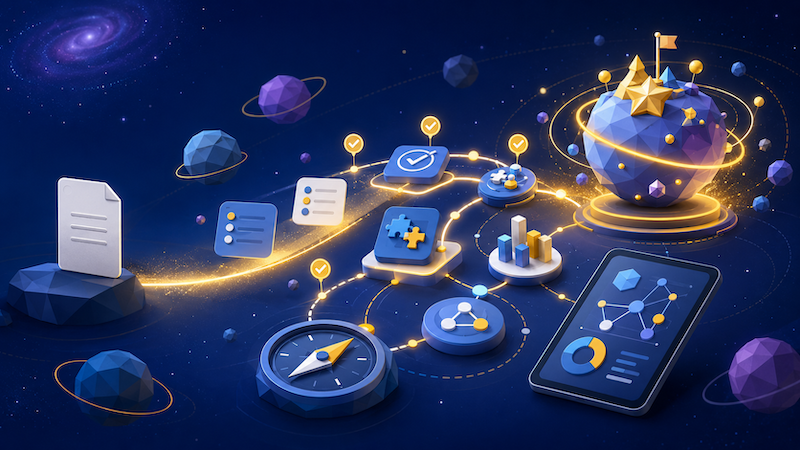
This is where the concept of continuous learning comes in. Instead of accumulating knowledge solely for an examination at the end of a semester, the trend is moving towards continuous and practice-oriented learning formats.
Learning is becoming a dynamic, ongoing process supported by modern tools and platforms.
Traditional Examinations: A Model Under Pressure?
Traditional examinations based on fixed questions and the one-time recall of knowledge are facing increasing criticism.
Their weaknesses are clear:
- Lack of flexibility: Traditional examinations often measure only knowledge that can be recalled in the short term, rather than its long-term application or the individual learning process.
- High levels of stress: A single examination at the end of a semester places enormous pressure on students and leaves little room for mistakes.
- Limited practical relevance: Professional life rarely requires someone to reproduce memorised knowledge within 90 minutes. Teamwork, problem-solving, and creative approaches are often more important.
- Limited continuous feedback: Students frequently discover only at the end of the semester whether they have genuinely understood the material.
As a result, educators are discussing whether more dynamic and continuous forms of assessment could supplement or partially replace these examination formats.
Possible alternatives include:
- project work
- interactive learning games
- regular competency checks
- presentations
- group assignments
- practical tasks
- continuous learning analytics
How Learn Battle Supports This Transformation
This is where Learn Battle comes in.
The app makes learning engaging, interactive, and playful – matching the expectations of modern students.
Learn Battle allows educators to design courses in which students can directly apply and reinforce their knowledge. At the same time, students remain motivated and can develop greater enjoyment in learning.
Learn Battle Introduces Gamification into Education
Knowledge is taught and reinforced through challenges, quizzes, and friendly competitions.
Game-based elements can:
- increase attention
- improve motivation
- encourage regular learning
- provide immediate feedback
- make learning progress visible
Learn Battle Supports Continuous Learning
Instead of studying exclusively for one major examination at the end of a semester, students can make continuous progress.
Regular tasks and interactive content ensure that knowledge is reviewed, applied, and retained over the long term.
The learning process is therefore distributed throughout the semester rather than being focused on a single examination date.
The Future: A New Learning Culture
Whether traditional examinations will disappear completely remains uncertain. A hybrid approach is more likely.
Project work, regular competency checks, and gamified learning platforms could supplement traditional examinations or even replace them in certain areas.
The aim is to create a learning culture that does more than transfer knowledge. It should also inspire students and educators to enjoy the learning process.
With Learn Battle, we are actively helping to shape this transformation.
Our vision is clear:
Learning should not merely be a necessary means to an end. It should be a motivating and dynamic process that inspires and engages people.